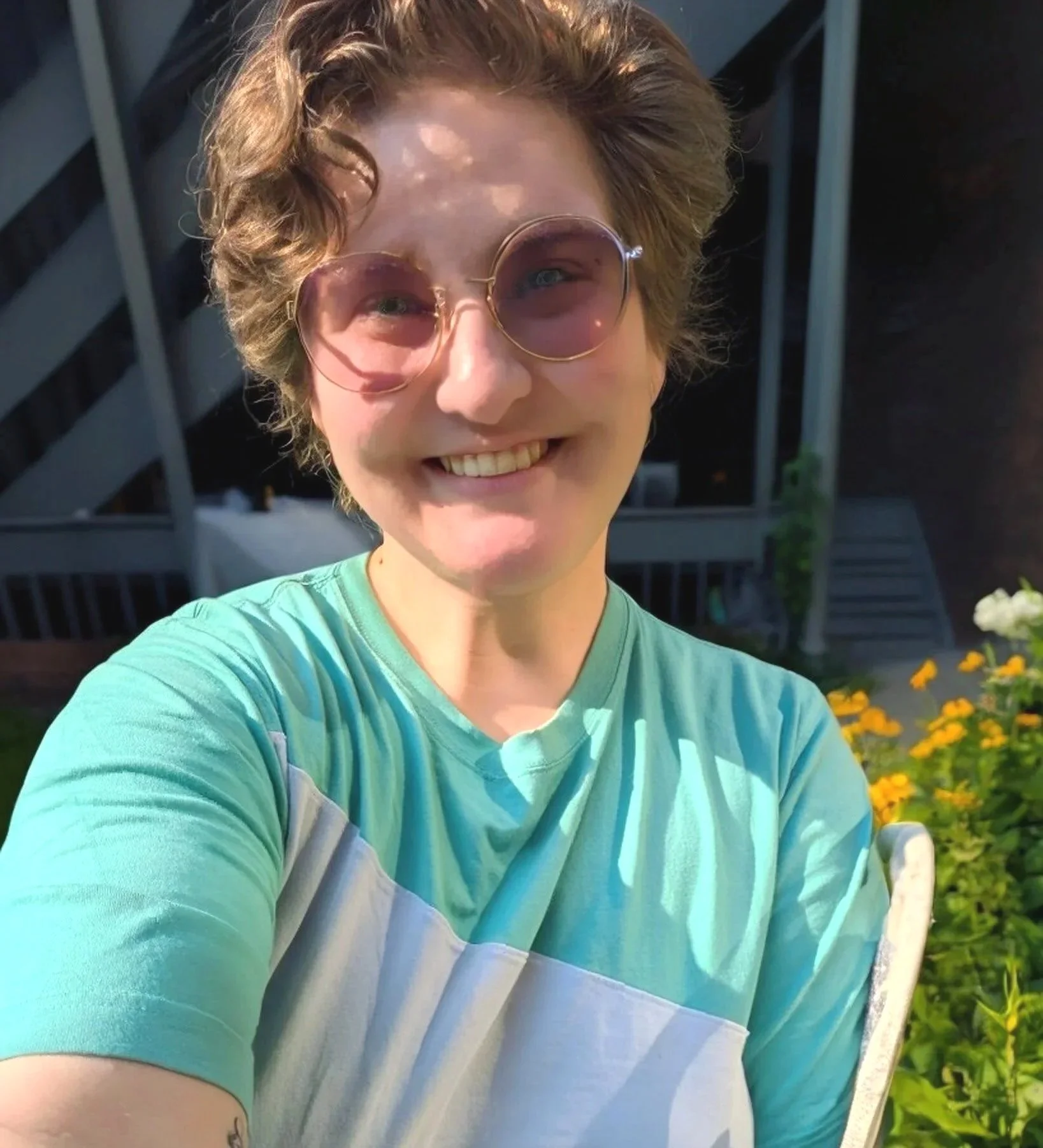
Hi! My name is Maia, and welcome to Mind Trek Counseling! I work with adults, children, teens and families–and openly embrace LGBTQ+/Queer clients—who would benefit from a non-judgmental space in which they can be heard. I love to share my knowledge about how the brain works, family systems, parenting styles, medical systems, history, relationship styles, and life transitions in addition to culturally-informed and dynamic treatment. I support adults and children with conditions including ADHD, Anxiety, Autism Spectrum Disorder, Trauma and PTSD, Depression, Chronic Illness, and/or Chronic Pain. I’m happy to be here to support you through your gender transition or questioning. I also have experience working with those who experience psychosis, and will consider clients with psychosis-spectrum conditions.
I’m here to support everyone and anyone wanting to improve key areas of their life to best support themselves and their loved ones.
My Background
I received a Bachelor of Arts (BA) degree with a double-major in Medical Anthropology and Cognitive Science from Case Western Reserve University, providing a foundation in cultural studies of human medical/mental health practices across history and geography in addition to the underpinnings of neurological and social development in the cognitive, or schematic, language-organizing brain. I also hold the degree of Master of Social Work (MSW) with a specialization in Trauma-Informed Care with Children, Youth, and Families, and Master of Arts (MA) in Bioethics and Medical Humanities from Case, specializing in mental health ethics. Here are some of my research and practice experience if they help you relate:
I worked at Free Clinic of Greater Cleveland providing trauma-informed gynecological and bedside-manner training to medical staff, and as a Gynecological Training Assistant instructing Sexual Assault Nurse Examiner (SANE) trainees at Cleveland Clinic Forensic Nursing and MetroHealth Simulation Center.
I worked as an Instructional Aide for children on the Autism Spectrum in 2021, providing individual educational instruction and mental health support learning to students ages 5–16.
I presented at the Canadian Association for Health Humanities 2019 Conference on my research comparing treatment of modern, feminized psychosomatic illnesses (such as Fibromyalgia and Chronic Fatigue Syndrome/Myalgic Encephalomyelitis) to the historical treatment and framing of Hysteria, calling into question the necessity and usage of the “psychosomatic” framework within medicine.
I assisted with programming for queer elders, adults, young adults, youth, and intergenerational events at the LGBT Community Center of Greater Cleveland. I also I worked with individuals experiencing psychosis-spectrum disorders at The Centers for Families and Children FIRST Episode Psychosis Program.
The modalities I use include ADHD Executive Functioning Coaching, Trauma Focused Cognitive Behavioral Therapy (TF-CBT), Somatic Psychotherapy, Dialectical Behavioral Therapy (DBT), Narrative Therapy, Acceptance and Commitment Therapy (ACT), Expressive Arts Techniques, Motivational Interviewing (MI), Psychoeducation, Family Systems, Internal Family Systems (IFS).
How can I help?
I provide a non-judgmental, trauma-informed space for adults, children, families, and LGBTQ+ individuals. Specializing in ADHD, Autism, AuDHD, Anxiety, PTSD, Depression, chronic pain, and gender identity, I blend my background in Bioethics and Social Work to offer culturally-dynamic care. I’m here to help you navigate life transitions and systemic challenges to best support your well-being.
Get in Touch with Maia
Maia Delegal, LSW, MSW
(they/them)

My top specialties are: Neurodivergence(ADHD/Autism/AuDHD), LGBTQIA+ Therapy, and Trauma-Informed Care.
Neurodivergence: ADHD, Autism, AuDHD
Autism Spectrum Disorder is considered a neurodevelopmental and mental health condition that can impact social effectiveness, executive functioning, motor regulation, sensory sensitivity, audio processing, and more. While many of science’s early models of ASD are based on white, cis-male children, new areas of discovery lead many to believe in distinct subtypes of Autism based on symptom profile, perhaps even age of diagnosis.
Autism impacts every individual differently, but many people have stereotypes or a basis of misinformation from which they come to understand Autistic people.
The therapeutic/scientific community is also learning more about ADHD, or Attention Deficit Hyperactivity Disorder. First, we’re seeing that while people with this condition process attention differently, that doesn’t always mean there’s a “deficit” in attention. Hyperactivity can refer to mental hyperactivity (“too many thoughts”) as well as physical hyperactivity (stimming, fidgeting).
There are three subtypes of ADHD: Predominantly inattentive, predominantly hyperactive, or combined presentation.
AuDHD is the unique profile of combined Autism and ADHD traits, some of which seem to “mask” or even “cancel out” one another. Many people with AuDHD are diagnosed later in life.
LGBTQIA+ Therapy
The marginalization of queer identities, non-monogamous identities, and sexual health within our culture has stifled the consideration of sex as a naturally occurring phenomenon. Adoption of heteronormative standards has been conflated with the repression of sexual experience outside of the nuclear family structure—namely, the establishment of marriage for heterosexual partners. Christian nationalism, patriarchy, cisnormativity, and white supremacy all play their roles in this paradigm, as well. Gender transition, fluidity, and questioning are, similarly, natural parts of the human experience with historical examples spanning the millennia.
Mental and sexual health competency, then, is not just being able to refer clients to Planned Parenthood or the local LGBT Center and “call it a day,” but the capability to engage meaningfully in all topics around sex and gender without stigmatization, prioritizing safety and education.
Trauma-Informed Care / Post-Traumatic Stress Disorder / Complex-PTSD
Formulating and strengthening a trauma-informed social work practice rests on the ability to consider which life experiences might result in negative cognitive patterns for the traumatized person. The scope of an entire life, however, will not emerge immediately or in a linear fashion. Instead, the clinician should assist the client in making connections between their current symptoms of distress and their traumatic experiences whenever the possibility presents itself. This requires a high degree of curiosity, patience, and compassion. Establishing a cooperative therapeutic relationship creates space for the client to direct the recovery process while emphasizing safety. Some clients exhibit more insight into their trauma than others, and some simply won’t remember the traumatic experiences. Regardless, social workers must honor their clients’ stories and the vulnerability necessary to share difficult experiences.
The Principles of Trauma-Informed Care:
Establishing Safety
Choice
Collaboration
Trustworthiness
Empowerment
Whether you worry about yourself, your loved ones, our collective future as humans on an Earth being actively harmed, or all of the above—you are not alone. You’ve taken a brave first step towards feeling more at peace by looking for a therapist. Thank you for seeking out ways to nurture and care for yourself. I’m here to help ease your burden and lift your spirits in whatever way makes the most sense for you.
I am under the supervision of Kristen Ayers, LISW-S, I.1800915-SUPV.